
Angel Bay
By Rob Nisbet

Rob Nisbet is this month’s winner of $617.50 for a horror story set in an idyllic countryside.
Bio: Rob Nisbet has had over 200 stories published in magazines and anthologies ranging from romance to horror. He also writes audio drama and has had, to date, seven audio scripts produced by Big Finish / BBC for their Doctor Who range.
Goodreads link: https://www.goodreads.com/author/list/12097189.Rob_Nisbet
Without further ado, “Angel Bay” by Rob Nisbet.
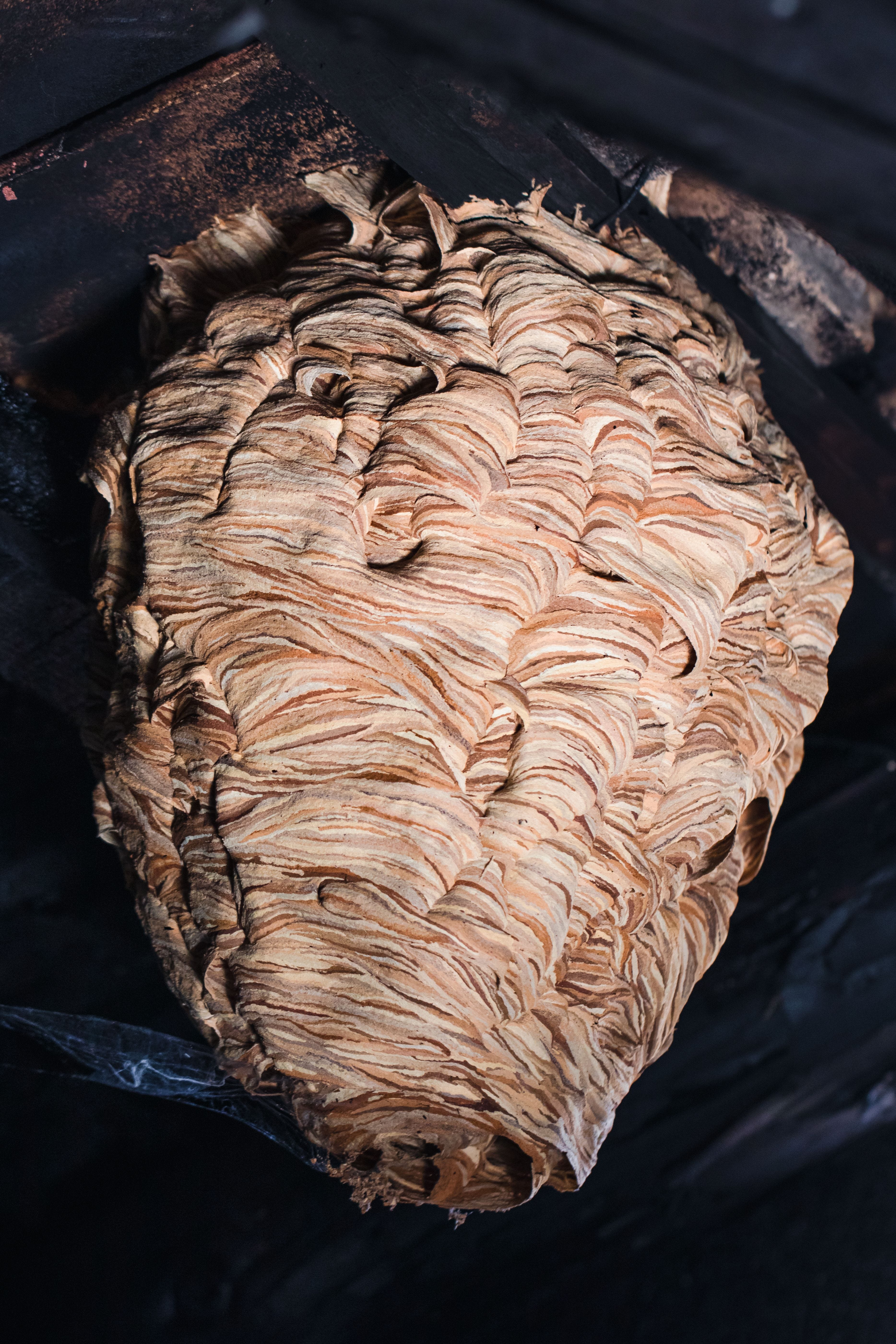
The walls of the distant cottage gleamed pure white against the brown-green shrubland and the clusters of purple heather which grew along the clifftop. Behind the cottage, a pale cyan sky met the horizon where tints of aquamarine, teal and turquoise shifted on the sparkling sea.
“We’re in for a heatwave,” said the land-agent, shifting his open-backed van down a gear to cope with the rutted road. “And the scenery…” he waved an arm to encompass the bright sun-baked coastline of Angel Bay ahead of them. “Ye’ll not find better than this in the whole of Scotland. Ye’ll have plenty to paint, I’m sure.”
Fergus agreed completely, as the lonely cottage grew closer: it was set back from the cliff edge and conspicuous as the only building in the vast curve of coastline. This would be his home, for a few weeks at least. Like the van, he felt his life shift down a gear to a manageable, slower pace. He was happy to leave behind the Beatles, Mary Quant, and the seemingly endless battle between Russia and America to place a man on the moon. He was looking forward to the peace and solitude, and the painting: committing this magnificently bright and rugged landscape to canvas. And he might even get his head around his relationship with his wife, Moira, too.
“I’ll not promise,” Moira had twitched him one of her half-smiles. “But I may come and visit, see how you’re getting on, in a few days’ time.” Not much of a commitment, Fergus had thought, after twenty years of marriage. He felt no guilt at all in setting off by himself for a while. He told himself that it was what they both needed: time apart to think, to reassess. And he might as well produce a few landscapes at the same time.
The van crunched over the gravelled drive to the cottage door, and the agent produced a bunch of keys. “Not that ye’ll need to lock up, it’s that remote out here.”
The agent showed Fergus around the cottage, and just a few minutes later, Fergus had transferred his luggage and painting equipment into the small stone building and even had his easel set up by a broad window with a fresh white canvas propped up on it. He ran his long fingers through his just-greying hair. “All set.”
“I’ll leave ye in peace,” said the agent, handing over the keys. “The previous tenant was here for the solitude too. A writer. Said he wanted to be as far from a telephone as possible.” And with a promise to return with fresh produce in a few days’ time, the agent departed.
Fergus listened till the van’s engine faded away, replaced by the squawk of gulls and the background drone of insects. He was alone. Fergus relished the prospect. Here, he had no commitments; no annoying compromises; he could do whatever he wanted. Moira had often called him selfish. Poor Moira, she could always find something to complain about. Well, selfish or not, he planned to make the most of this opportunity. It was early evening, still warm, and the light would last for an hour or so yet. He picked up the keys, then, remembering the agent’s words, tossed them onto a hall table and walked out to explore.
The sea drew his eyes, and already Fergus found himself forming pictures of the clifftop in his mind. The sparse brown thicket of gorse, clumps of vibrant heather, with the restless sea a foaming presence below. He found a tumble of flinty rock which had cascaded down a steep slope, forming a natural path down to the beach. Carefully he descended. No sand here; no tourists; just a swathe of seaweed-strewn rocks and stones being inexorably smoothed by the foaming-in and dragging-out of the breathing sea. Angel Bay curved around him to either side. My own piece of Scotland, he thought. He felt suddenly more alive than he had for months, he twirled on the stones, his arms held out wide, surprised at his own frivolity; there was nobody in sight in any direction. A southerly breeze wafted down from inland, and Fergus turned to welcome its invigorating coolness. He noticed dark crevices set into the base of the cliff face. Caves? Fergus wondered how deep they were, and what the beach and sea would look like from inside. He felt years younger and wanted to clamber across the boulders, already imagining a bright summer canvas of the sea viewed from within the cave, framed by dark rock. The breeze seemed suddenly thick with the scent of heather and, looking up, a gleam of yellow caught his eyes. There, high on the clifftop was… What? A figure? Fergus shielded his eyes with a hand and felt again that strange thickness of the air. He saw a woman. He couldn’t distinguish her face at that distance; her hair was black, and she wore dark leggings with a flowing summer top in what his artist’s eye recognised as a blend of cadmium and lemon yellows.
At home, he wouldn’t have considered attracting her attention but, on a sudden impulse, he waved and called out to this stranger. She stood at the clifftop, looking out at the sea, dangerously close to the edge, he realised, but she didn’t appear to have noticed him. The isolation of the bay hadn’t had time to erode his habitual restraint, but Fergus felt an exhilarating freedom of spirit here, and a strange pull towards this woman. “Hello!” He called out to her again and scrambled back up the path of tumbled rocks as fast as he could, clawing at them with his hands in the steeper sections. He emerged, out of breath, onto the clifftop – and the woman had gone.
He looked around, panting, and felt a pang of despair so strong that he nearly cried out at his loss. The breeze toyed with his hair and its coolness seemed to restore some normality to his senses. He strode to where he’d seen the woman, and gazed down over the edge to where he’d been standing among the rocks and restless water. The beach was empty. The scrubland lay around him to each side of the bay, its colours dulling with the onset of dusk, but he could still see for miles. Behind him was the cottage; he judged it too distant for the woman to have hidden there in so short a time. He raised his head, as if, like an animal, he could scent her on the wind. He wasn’t sure what he’d felt; a pull – an attraction to this woman, that had made him scramble up the cliff, grazing and cutting his hands, and his heart still pounded from his exertion. With some surprise, he realised that he was thinking of his wife, Moira; of when they were both younger, and of the passion he had once felt for her. This vanished woman, this spectre, had aroused in him feelings he hadn’t felt for some time, but she had disappeared from the clifftop. It was impossible – unless… He scoffed at the idea: unless, of course, she could fly. He squinted, stupidly, at the sky, now blushed with stripes of faint crimson as the sun grew heavy to his left.
Fergus turned his back on the mystery and returned to his cottage. A swift search proved that the woman was not inside. He raked his fingers through his hair and snatched up his paints, brushes and wooden pallet. Feverishly he blended cyan and white into the palest glowing blue and used this as a broad-brushed wash over the whole canvas. Then came crimson, more blue, carmine, white and magenta in subtle streaks until he had reproduced the pre-dusk display he’d seen outside. Beyond the window, the light was fading fast, but his canvas now retained the twilight sky. Fergus reached for the tube of cadmium yellow, and with a few deft strokes had outlined the mysterious woman in the centre of his painted sky. He added her hair and legs in black. The figure seemed right to him, suspended impossibly against the sunset, but there was something missing. He took a dry brush and blurred the sky at the figure’s back into a suggestion of translucent beating wings. That was better, he thought; perhaps she could fly. The angel of Angel Bay.
***
The next day, Fergus woke early. The curtains of the cottage were thin, and the bedroom was full of morning light. He washed in cold water; the agent had explained how to use the log-burning range for cooking and heating. But the day was already warm; the last thing Fergus wanted to do was light a fire. He cut a thick slice from a loaf of bread, spread it with margarine and jam and ate it, standing before his painting of the previous evening. It was crude and would need some work before he’d be happy with it, but he was pleased that he’d already managed to be creative. The angel, if that’s what she was, lacked detail, barely more than a shape in yellow and black with an exaggerated pinched waist. He took a bite of the bread and imagined the figure with Moira’s face. It was the fine detail that always took the time; he expected it would keep him busy for the rest of the day at least.
But first a walk. He dressed in a t-shirt, shorts and sandals and stepped out of the cottage’s shade, squinting into the sun. Inland of the cottage was a copse of fir trees where he could gather the branches and cones he would need for a cooking fire, if he could bear the heat that evening. Most of the trees stood tall, but those nearest to him seemed to have been torn down. Perhaps the previous tenant, the writer, hadn’t been so lucky with the weather. Fergus gathered up an armful of branches strewn around on the ground. He was curious to see that, rather than being sawn or chopped, the loose wood appeared to have been chewed. Did they have beavers this far north? Fergus examined one of the many tree stumps of the copse; it definitely looked to him as if it had been gnawed by some animal. Still, it saved him some effort.
He staggered back to the cottage’s wood stack and threw his branches on top. They would soon dry out in this heat. Then he headed to the clifftop and the scramble of stones down to the beach. The tide was further in than the previous evening, so most of the rocks were submerged, leaving a narrow strip of shingle at the foot of the cliff. Fergus looked for a high-tide mark, wondering if he dared venture into the caves. It was then that he saw his angel again.
Once more he had the sensation of the air wafting over him, thickened as if with a fragrance which he realised now was nothing like the earthy smell of the heather. He looked around. The sun dazzled off the shallow water’s edge, lapping around boulders. And from out of the sun came the woman in yellow and black. She appeared to skim across the water without disturbing its surface: she was flying! So, she was an angel.
Fergus swayed unsteadily on his feet. He wanted to concentrate on the figure, but his head drooped, his eyelids suddenly heavy as if the air were oppressive, lulling him into sleep. He couldn’t think straight. Was he dreaming? Was the air so thick now that it distorted what he could see? In some deep rational centre of his mind, he knew that what he saw was impossible. The woman flew towards him, settling lightly on the shingle. It was Moira. A young Moira, as he had first met her, vibrant, exciting, her hair still a glossy black, her waist still slim, her voice… She spoke to him: a greeting. But not in words. It was as if he could hear her thoughts, and in that still young, confident, joyous voice that had once so enchanted him. He felt so lethargic, where she seemed so alive. This was impossible, and that rational centre told him that what he saw was not a true image. He saw Moira - but he knew that this was an angel. Moira’s voice seemed to flow over him with an explanation: “I am not as you see me,” the voice seeped into his mind, like the strange scent in the air.
“Are you an angel?” Fergus wasn’t sure if he had asked the question out loud or not.
“How you see me is a product of your own mind,” she replied. “I have spoken with others before you, they have said I exude a chemical which affects your perception of me. It also promotes a melding of awareness between us, allowing this form of communication.”
The woman stepped forward. Fergus felt a rhythmic thrumming in his head, and a gasping longing for her, this woman with Moira’s young face, Moira’s young body. He imagined the image of a biblical angel, but a radiant halo and feathered wings didn’t fit this figure. “No,” came Moira’s voice. “I am something else.” She skimmed smoothly above the shingle to recline on a slab of rock. Fergus felt her beckon, asking him to lie with her.
The rock was warm, he lay down, dizzy and disoriented by the intoxicating scent of her, not sure anymore of what was real and what was not. He reached out to her, caressing, feeling her hard skin like a carapace. His hand slid down to her minute waist and he felt the thrum of her invisible wings. She twisted to face him, an arm and leg pressing him down. He stroked her arm, felt its firmness, its spikey coarse hairs as they held him against the rock.
A blur of yellow and black appeared above them, almost a silhouette against the bright sky. A gigantic wasp lowered itself on buzzing wings, legs reaching out like a spindly clawed hand, vast enough to grasp Fergus’s entire body. He lay still, stupefied, in the embrace of his angel, as the wasp crawled up over him, obscuring the sun and positioning its pulsing abdomen over his stomach.
“Keep still,” murmured the angel.
The wasp raised its great sting and thrust it into Fergus’s stomach, pressing deeply.
Fergus felt a fire burn through him: red and midnight black with stabbing sparks of white. He gasped at the pain of it but remained lying in the angel’s arms. He turned to face her as the giant wasp pulled free and buzzed into the sky. She was transmitting soothing thoughts to him, he could smell them in the air, keeping him from screaming as her face changed. She had never been Moira; she’d told him that. She drew close, observing him with her large compound eyes, her face tilted, glossy panels of black and cadmium catching the sun, jaws extended like grasping interlocking hands either side of her blunt armoured mouth.
He felt faint now, an oppressive stupor seeping through his body. The angel’s voice whispered in his mind. “I love you…” She too crawled to loom over him and raised herself as if to sting. But there was no sharp spike, her swollen abdomen ended in a rounded point which pressed and squirmed firmly into the wound made by the sting. Fergus felt the pressure of the egg enter deep within him. It felt purple and gold, alive and precious. Then he knew no more; the venom dragged him into oblivion.
***
Fergus realised that he was moving around the kitchen, preparing a meal. He felt like he was awakening from a deep sleep to find himself already active, gradually becoming aware of what he was doing. He found cutlery in his hands and placed them on the kitchen table. There were two potatoes baking in the range. He had evidently raided the wood stack and got a fire going. He rubbed at his eyes as if to wake himself. Had he just lost a portion of his memory? He must have started preparing the meal, but he couldn’t remember doing so. In fact, he couldn’t remember anything since – when? Collecting wood from the copse this morning.
Something was wrong, but to his frustration, he couldn’t bring it to mind. He reached mechanically for a tin of beans, tipped them into a pan and set them to heat on the range. Jacket potatoes, beans and a bottle of beer: Moira would not have approved. Poor Moira. He rummaged through the kitchen drawers for a bottle opener. He found one, and also a small notebook lying under a jumble of utensils. The agent had said that the previous tenant had been a writer. Perhaps he’d left this notebook behind.
Fergus sat at the kitchen table and flicked through the pages while he ate. The handwriting was a messy scrawl and much of it didn’t make sense. It appeared to be the writer’s notes for a story he planned to set here in Angel Bay. There were accounts of local legends of the ‘angels’ who, it was said, inhabited this barren region. Of people going missing, presumed lost at sea. Of the locals’ suspicious natures which had kept this area underdeveloped and unpopulated. Fergus forked beans and potato into his mouth. Unspoilt would be a better description, a natural swath of coastline with this cottage being the only intrusion imposed by man. He turned a page to where the writer had drawn a geometric pattern resembling a honeycomb, and a sentence which could have been the start of a story: It was too dark to see clearly, but the caverns were segmented into man-sized cells where embryo creatures writhed and grew. A writer of science fiction or fantasy, then; not Fergus’s cup of tea. He wondered if the ‘caverns’ had been inspired by the caves he’d seen in the cliffs. He flicked over a few more pages, and the writing became even more untidy: The sting must have contained a tranquiliser of some potency for the wound is massive, and only now begins to ache. I have tried to reach inside. My fingers can only penetrate so far before the pain in my belly becomes impossible to bear. And all the time, I can feel the egg – the creature – squirming inside me.
Fergus stopped chewing. The words snagged in his mind and a terrible suspicion filled the gap where he knew his memory was missing. He pulled up his t-shirt and ran a hand over his stomach. He could feel nothing unusual. He rose and went into the small bathroom where a mirror was placed above the sink. Again, he felt over his stomach and felt a slight twinge of tenderness on one side. He peered closely in the mirror and found a small blotch of amethyst purple. An insect bite? No, he thought, a wasp sting. He had the vaguest recollection of a wasp. He walked into the living room, and there his hazy memory seemed to be confirmed. At some time during the day, he must have completed his painting. He recognised the style of his own brush strokes. Set against the dusky striped sunset he had transformed the yellow and black flying figure of the ‘angel’ into a detailed picture of a gigantic wasp.
